
The right change starts with understanding.
Every system has a history. Every business has different needs. We begin with the situation, not a preferred stack or a predetermined rebuild.
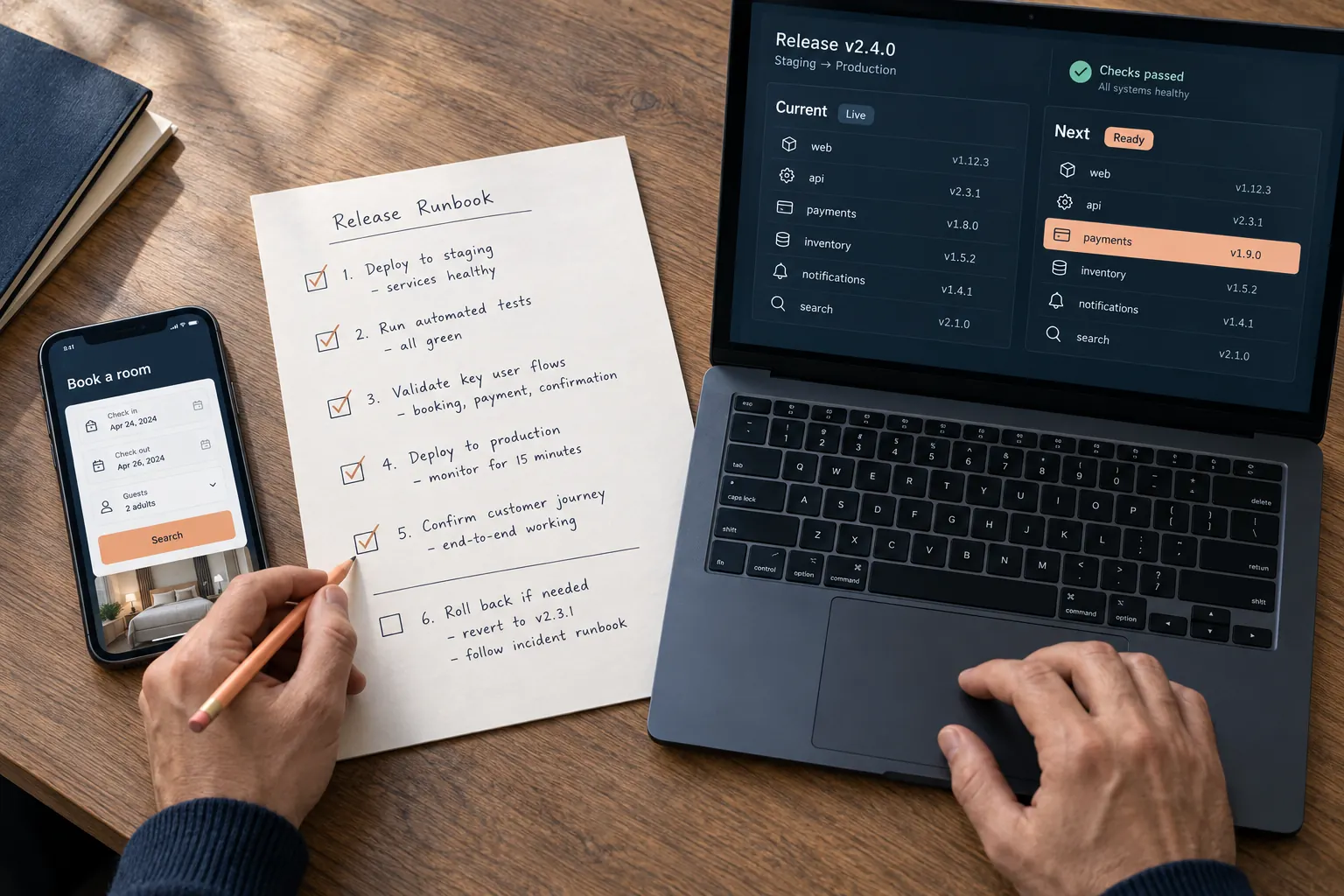
Understand what exists
A useful technical picture begins with the product: who relies on it, what they do and what happens when it struggles. We trace important flows and dependencies, look at representative demand and separate observations from assumptions.
The result is a shared understanding of the system and the constraint worth investigating.
Decide what matters
Technical choices carry trade-offs. We compare the work required, the effect on customers, the new complexity and how a change could be reversed. Sometimes the strongest decision is to leave a component alone.
Keep, extend, simplify or replace. The choice follows the evidence.
Engineer the change
A sound idea needs a workable path into the existing system. We make dependencies explicit, plan how to move safely and keep the important behaviour visible as the work progresses.
The implementation should be understandable to the people who will run it.
Learn from the result
A release is a change, not proof of an improvement. We compare the result with the starting condition under meaningful workloads, look for unintended effects and use what we learn to inform the next decision.
Capacity, performance, reliability and business demand remain distinct measures.
Preserve the progress.
Remove the limit.
A working product with customers is valuable. Our role is to understand what it needs next and bring the engineering judgment to make that change well.
Read our technical thinkingWhat needs to work next?
Tell us what customers value, where the technology is under pressure and what the next stage needs.
Discuss your next stage