
Make the next change easier.
The architecture should fit the business you are building. Its complexity needs a reason.
Discuss your next stage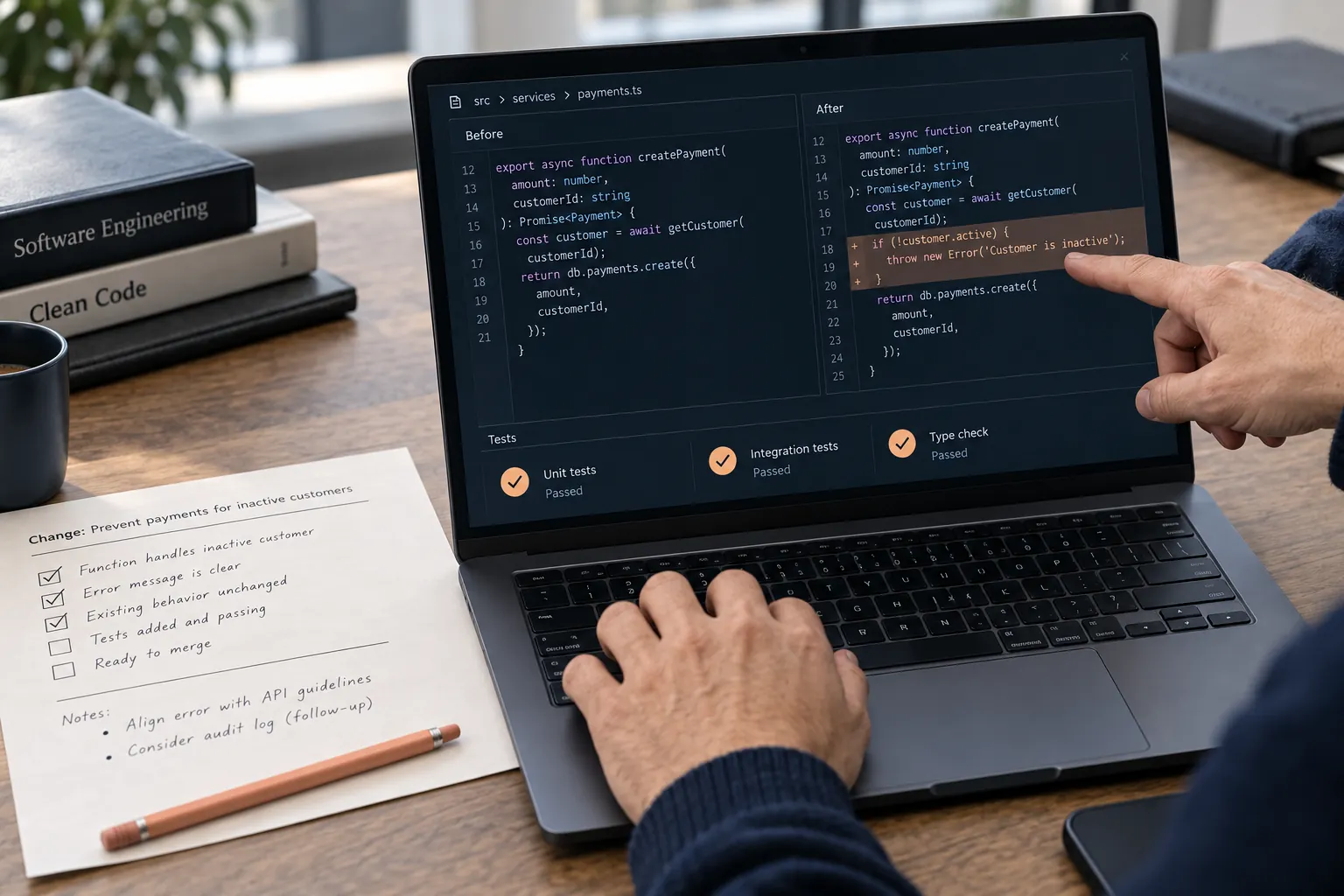
Architecture & evolution,
in practice.
Evolve your software architecture with clear boundaries and practical migration paths. Preserve what works and change what limits the business.
Understand before replacing.
Existing systems carry working behaviour as well as technical limitations. Some of that behaviour is poorly documented but essential to customers. Before proposing a new architecture, understand the journeys, data and dependencies that must continue to work.
Choose boundaries with a purpose.
A modular application can be a strong foundation. Separate services can be useful when independent operation, scaling or ownership solves a concrete problem. The decision depends on the workload and team, not a universal progression from simple to distributed.
Move in observable steps.
An architectural change is also a transition. Define what moves first, how old and new behaviour will be compared, what happens to data and how to respond if the change behaves differently than expected. Small, reversible steps often make the learning more useful.
The useful questions.
- Which change is currently difficult to make?
- What must remain consistent during a migration?
- Where would a clearer boundary reduce complexity?
- How will you know when the new path is ready?
Explore the thinking.
Read the related engineering noteMake the next change possible.
What do you need the product to do next, and what stands in the way? We help businesses with paying customers turn those questions into focused engineering work.
Discuss your architecture